This historical report concerns first-half 2025 observations and the July 2025 outlook. Third-quarter expectations refer to 2025, not current market conditions.
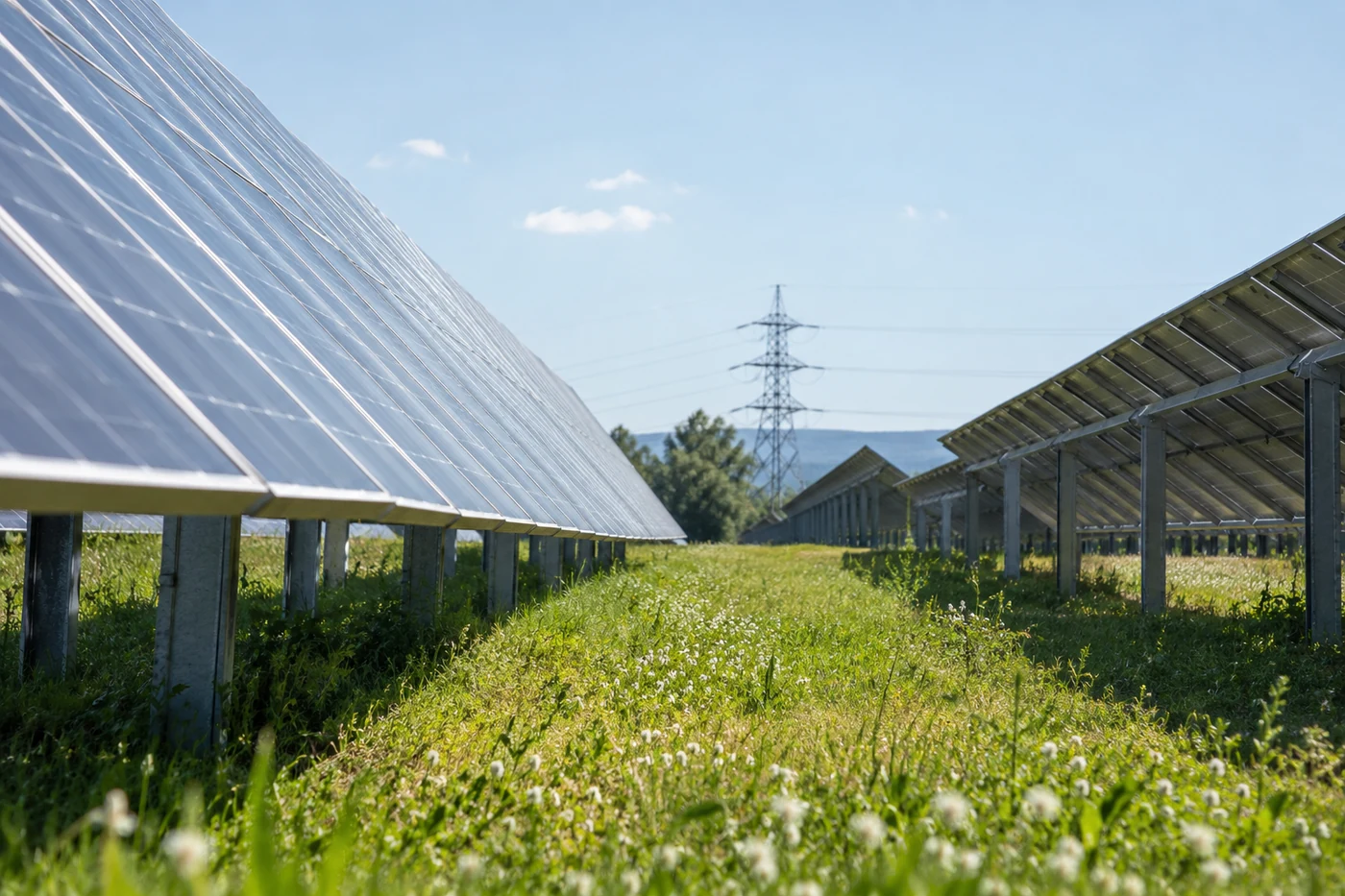
Photovoltaic systems are generating large amounts of electricity across much of Europe. As a result, analysts expect negative Strompreise in Europa to keep rising significantly.
In the first half of the year, negative price hours increased in almost all European countries. Notably, eight of them recorded more than 300 such hours.
In Germany alone, there were 389 hours of negative market prices in the first half of the year . But Germany is by no means alone in Europe in this development, nor is it the leader. A report published Thursday by Montel Analytics reveals a Europe-wide trend. The analysts predict that record levels are likely to be reached in many parts of Europe, as photovoltaic generation – as in the second quarter – is also reaching new highs.
According to the Montel study, the Swedish price zone SE2 had the highest number of negative prices in the first half of the year, with 506 hours.
„This is due to unusually strong inflows from hydropower, bottlenecks in electricity transmission, changes in flow-based market coupling, and the continued increase in renewable energy output,“ the report states. Spain followed with 459 hours and the Netherlands with 408 hours. Germany ranked fourth in Europe with 389 hours of negative exchange electricity prices. France (363), Belgium (361), Finland (337), and Denmark 1 (326) followed, also recording more than 300 hours for the first half of the year. Montel found that the number of hours with negative electricity prices has increased in almost all European countries this year. The analysts also expect this trend to continue in the future.
The direct link to this is the rising generation of photovoltaic systems, which reached a record high in Europe in the second quarter of 2025. Total generation in the second quarter was 104.4 terawatt hours, of which 29 terawatt hours came from photovoltaic systems in Germany. Spain generated 15.8 terawatt hours of solar power, and France still generated 9.9 terawatt hours. Growth rates compared to the first quarter ranged between 20 and 40 percent in many countries, according to Montel.
At the same time, Montel recorded a record low in hard coal and lignite power generation of 52.2 terawatt hours. This was eleven percent less than in the same quarter of the previous year. The largest decline was recorded in coal-fired power generation in Poland, but there were also major cuts in Italy, Spain, Romania, and Hungary.
Jean-Paul Harreman, Director at Montel Analytics, expects negative Strompreise in Europa to reach record levels in the third quarter. He links this trend to the continued expansion of renewables, especially photovoltaic systems. At the same time, electricity demand is not growing at a similar pace.
Montel also expects prices to fluctuate more sharply throughout the day. Harreman explains that the spread between midday photovoltaic output and evening demand peaks will likely be widest in Central and Western Europe. Germany, the Netherlands, and Belgium will probably continue experiencing negative Strompreise in Europa during the afternoon. In the evening, prices are expected to rise sharply as fossil fuel plants ramp up. A similar pattern could emerge in parts of Southeastern Europe. However, limited grid infrastructure and weak cross-border interconnections may prevent this region from fully benefiting from cheaper electricity in neighboring markets.
On the other hand, there are also factors that could lead to rising electricity prices. These include limited generation from hydropower and nuclear power plants, as above-average summer temperatures lead to low water levels. Furthermore, the global political situation is causing continued volatility in the global LNG and gas markets. European countries in particular are being forced to take additional measures to secure their gas supplies for the upcoming winter. This, in turn, is likely to further drive up European wholesale gas and electricity prices.
Harreman says industrial customers and large-scale consumers could face significant price volatility this quarter. „The simultaneous occurrence of extremely low and extremely high daily prices, driven by solar production patterns, nuclear constraints, and infrastructure limitations, presents both operational challenges and procurement risks.“
Montel’s own first-half 2025 post lists Finland at 337 negative-price hours. Montel Analytics: historical post.