1. Introduction: Evolution of Germany’s Electricity Generation
Germany’s electricity generation has undergone significant changes since 1990. With a strong focus on decarbonization, the country has transitioned from fossil fuel dominance to a renewable energy leader. Key policies such as the Renewable Energy Act (EEG) and the Coal Phase-Out Plan have played a crucial role in reshaping the energy mix.
This article provides an in-depth analysis of Germany’s electricity production from 1990 to 2024, highlighting key trends, policy impacts, and future projections based on government and industry reports.
2. Historical Overview (1990–2012): Conventional Energy Dominance
From 1990 to 2012, Germany’s electricity sector was heavily reliant on coal, nuclear, and natural gas. However, early efforts to integrate renewable energy began in the late 1990s.
Key Trends (1990–2012):
- 1990: Coal accounted for 57% of electricity generation.
- 2000: The EEG (Erneuerbare-Energien-Gesetz) was introduced to support solar and wind power.
- 2011: Germany announced its nuclear phase-out after the Fukushima disaster.
- 2012: Renewable energy reached 23% of the electricity mix.
During this period, energy production remained stable, but solar and wind installations started increasing, supported by feed-in tariffs.
Reference Sources:
- Federal Environment Agency (UBA): „Germany’s Energy Mix 1990–2012“ – https://www.umweltbundesamt.de
- AG Energiebilanzen e.V.: „Bruttostromerzeugung in Deutschland 1990–2012“
3. Recent Trends (2013–2024): The Renewable Energy Boom
Between 2013 and 2024, Germany’s energy transition (Energiewende) accelerated significantly, leading to rapid growth in renewables and a decline in fossil fuels.
Key Developments (2013–2024):
- 2018: Renewable energy overtook coal as the largest electricity source.
- 2021: The government committed to phasing out coal by 2038.
- 2022: The last nuclear power plants were shut down.
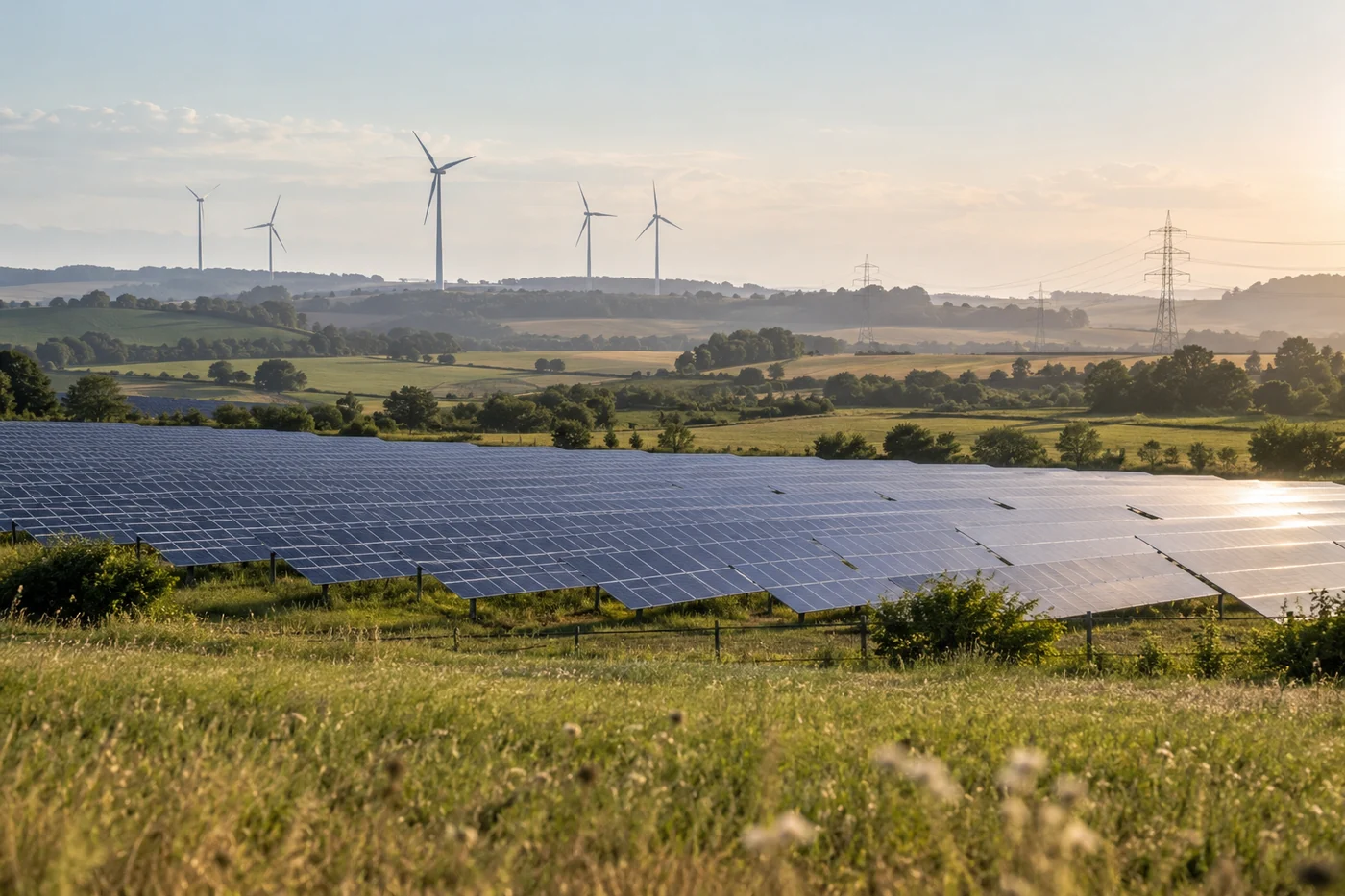
- 2024: Solar and wind contribute over 55% of total electricity generation.
Government reports indicate that Germany is on track to meet its 2030 target of 80% renewable electricity, supported by increasing grid modernization and energy storage expansion.
Reference Sources:
- Agora Energiewende: „Energiewende in Zahlen 2024“ – https://www.agora-energiewende.de
- Federal Ministry for Economic Affairs and Climate Action (BMWK): „Germany’s Energy Strategy 2024“ – https://www.bmwk.de
4. Future Outlook: Germany’s Energy Transition to 2030 and Beyond
Germany is committed to achieving climate neutrality by 2045, with the electricity sector playing a key role. The country’s long-term strategy includes:
- Expanding solar and wind capacity to over 400 GW by 2035.
- Developing large-scale battery storage solutions to stabilize the grid.
- Increasing hydrogen infrastructure for clean energy storage and industrial use.
- Integrating smart grids and digital technologies for better energy management.
With ambitious policies and strong investment in renewables, Germany is expected to set the standard for sustainable electricity generation in Europe.
Reference Sources:
- German Energy Agency (dena): „Electricity Grid 2030+“ – https://www.dena.de
- Solarenergie.at: „Germany’s Electricity Generation Trends: 1990–2024“ – https://solarenergie.at/germany-electricity-generation-1990-2024
Conclusion
Germany’s electricity generation has shifted dramatically from coal and nuclear dependence to a renewable-driven system. With over 55% of electricity now coming from wind and solar, the country is on track to achieve 80% renewable energy by 2030 and full decarbonization by 2045.
This transition is supported by strong government policies, technological advancements, and increased investments in clean energy infrastructure.
Final Reference List:
- Federal Ministry for Economic Affairs and Climate Action (BMWK) – „Germany’s Energy Strategy 2024“ – https://www.bmwk.de
- Agora Energiewende – „Energiewende in Zahlen 2024“ – https://www.agora-energiewende.de
- German Environment Agency (UBA) – „Germany’s Energy Mix 1990–2012“ – https://www.umweltbundesamt.de
- AG Energiebilanzen e.V. – „Bruttostromerzeugung in Deutschland 1990–2024“ – https://www.ag-energiebilanzen.de
- Solarenergie.at – „Germany’s Electricity Generation Trends: 1990–2024“ – https://solarenergie.at/germany-electricity-generation-1990-2024