Historical report: Austria, July 2025. The ElWG passages describe proposals and attributed positions from that debate, not current law.
A recent study assumes that the capacity of battery storage systems must increase eightfold by 2040 to achieve climate neutrality.
For years, photovoltaic systems have been touted as the key to the energy transition, as a cost-effective option to escape volatile electricity prices on the stock exchange. Recently, however, a different wind has been blowing. The July 2025 draft Electricity Industry Act (ElWG) was discussed as proposing to require those who feed electricity from their PV systems into the grid to pay. Some consider this long overdue to relieve the strain on the power grids. Others, however, fear for their promised benefits and feel offended by the shift in the political narrative.
Amidst this debate, a second major issue is simmering: that of energy storage. Whether large battery storage systems for industrial plants or smaller ones for every home, both promise to address the problems described .
A recent study commissioned by Photovoltaik Austria (PV Austria) also demonstrates that battery storage is essential. The federal association, together with the transmission system operator Austrian Power Grid (APG), the Graz University of Technology, and the consulting firm D-Fine, calculated the storage needs that will arise as a result of the energy transition. The bottom line: The path to climate neutrality by 2040 depends on the expansion of battery storage.
Backbone of the energy transition
Renewables like solar and wind don’t produce electricity at the push of a button, but rather when the sun shines and the wind blows. The grid can’t always cope, which is why power plants sometimes have to be shut down . According to the grid infrastructure plan, nationwide PV capacity alone is expected to increase from the current nine to 41 gigawatt-peak (GWp) by 2040. According to the study, electricity demand will increase to 125 terawatt-hours (TWh) by then. This is somewhat lower than previous forecasts by other institutes, but still roughly twice the current level.
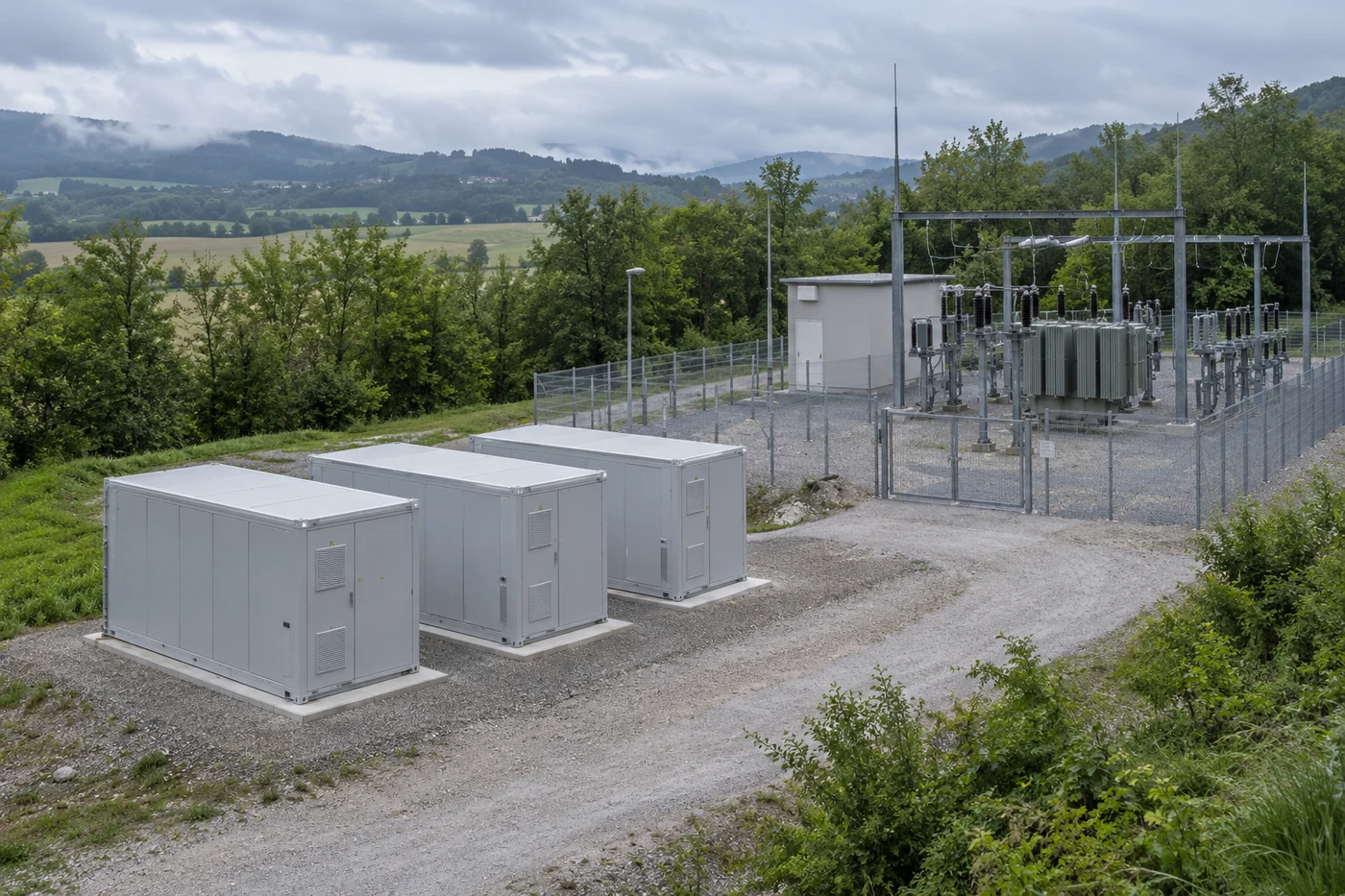
Because generation and consumption do not always coincide in time, there is an enormous need for flexibility. According to the analysis, this will increase sixfold from the current level to 41 TWh by 2040. Conventional storage power plants will thus reach their capacity limits, which will also increase the need for alternatives, such as battery storage. The authors estimate a factor of eight for these. This corresponds to six gigawatts (GW) of small-scale storage (households, businesses) and 2.7 GW of large-scale storage. Ultimately, it is primarily the demand for within-day energy shifting that is growing rapidly, as the model calculations based on APG data show.
The historical report described the ElWG draft under review in July 2025 as pushing for expansion. The operation of storage systems is to be explicitly permitted for energy communities, and bureaucratic hurdles are to be reduced. „System-serving“ storage systems are also to be exempted from grid fees. However, what exactly this includes is unclear, as Wien Energie, for example, criticizes in an analysis. The municipal energy company is calling for a general exemption similar to that for pumped storage systems.
Way clear for investments?
PV Austria CEO Herbert Paierl, on the other hand, remains optimistic that the „double burden“ will soon end. The historical report described authorities charging fees for both electricity withdrawal and grid feed-in. In Germany, regulators have already exempted large-scale storage systems from these charges, which has encouraged a surge of investment. These developments highlight the growing importance of battery storage incentives for accelerating the energy transition.
Paierl sees the obstacle rather in the grid development plans of the distribution grid operators. These are too non-binding, which lacks planning security for investments, especially for large-scale storage facilities, as investor Alfred Weinberger, head of Amarenco Group Solar Austria, adds. The report described voluntary submission to E-Control at that time.
The July 2025 report described the draft ElWG as making the submission of comprehensive plans in accordance with the regulatory authority’s specifications mandatory, with updates every two years and a mandatory publication requirement.
Regulators expect this to increase transparency, and they believe that the „legalization“ will also give the plans a certain degree of binding force. However, the current approach still does not amount to joint planning—something that would make sense for a cost-efficient expansion.
The study models system-wide scenarios, not a purchase subsidy or guaranteed return for an individual battery. APG-hosted study.